
Are Offices Getting Away From the Gray Color Trend and Moving On to More Neutral Beige Tones?
Walk into ten offices across Lancaster and Berks County and you will likely see the same wall color in eight of them. Gray has been the default for corporate interiors for over a decade. It looks clean, it photographs well, and nobody ever got fired for picking gray. But the commercial interior designers whom Lancaster, PA businesses are calling these days are fielding different requests. Clients want warmth, a space that feels less like a server room and more like somewhere people want to spend eight hours a day.
This shift shows up in national color forecasts, in what manufacturers are sending us, and in the projects we are walking through with Pennsylvania business owners right now. Here is what is actually happening with office color and how to make the switch without your space looking dated in five years.
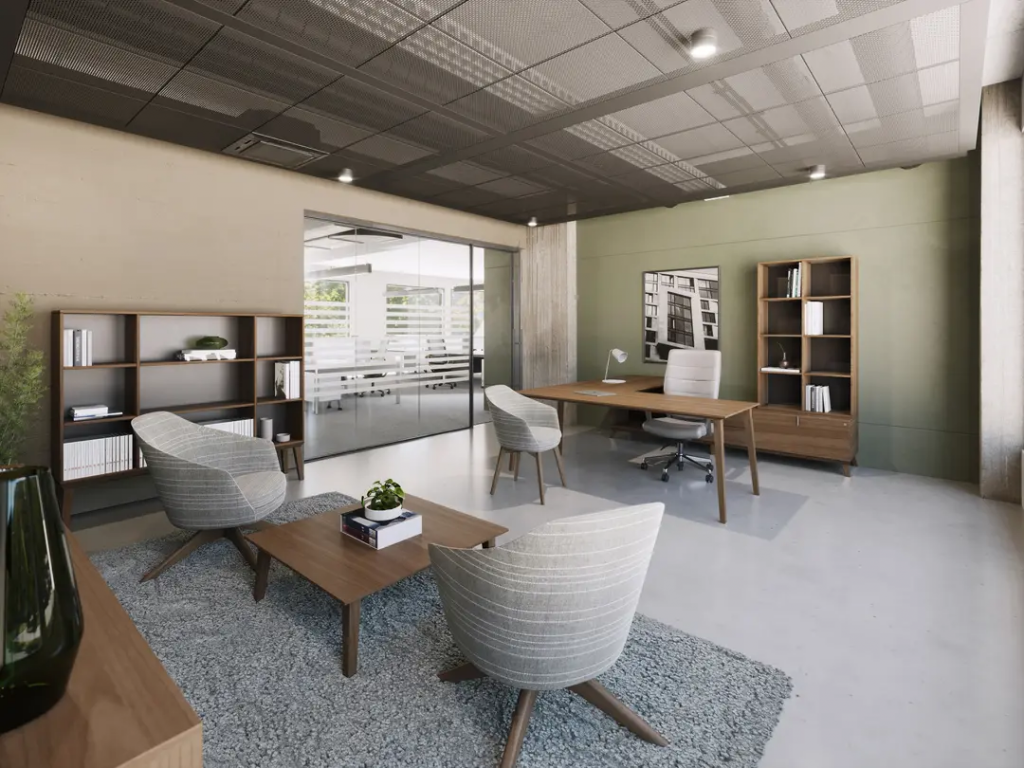
Why Gray Took Over Offices in the First Place
Gray earned its spot. It is easy to coordinate, it hides scuffs better than white, and it pairs with almost any brand color. For a decade of open floor plans and minimalist design, gray was the safe choice.
The problem is that playing it safe eventually starts to feel sterile. Employees who spend long days under fluorescent lighting in a gray box are not exactly walking into a space that energizes them. After years of remote work, people expect more from an office. A flat, cool palette does not do the job anymore.
What Designers Are Actually Seeing in 2026
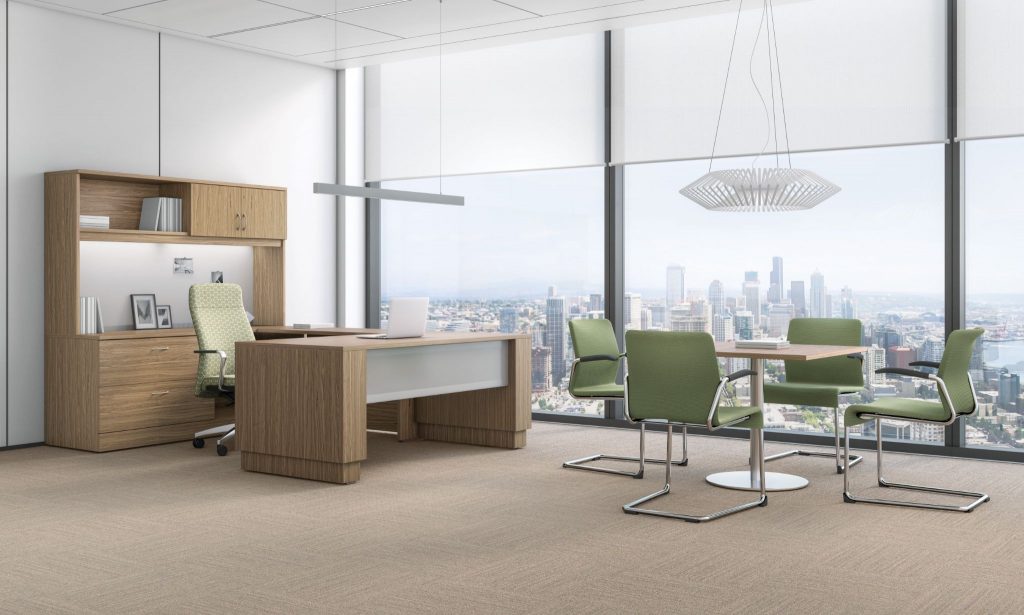
National color research backs this up. Homes & Gardens reports that steely, cool grays are being replaced with warmer neutrals such as beige, greige, taupe, and putty tones, driven by demand for calming, grounded spaces. Sherwin-Williams color manager Emily Kantz put it simply: these new neutrals offer the versatility people loved about gray but with a softer, more natural feel.
Designers interviewed by LUXE Interiors and Design describe clients gravitating toward wheat, caramel, terracotta, and warm grays with taupe undertones. These are not the cool grays of the past decade. They are tones meant to feel cocooning, not clinical.
For commercial spaces, this means walls, panels, and furniture finishes that lean warm instead of cool. Think sand, oat, and soft greige rather than the steel and charcoal that dominated office design through the 2010s.
Beige Is Not the Only Answer
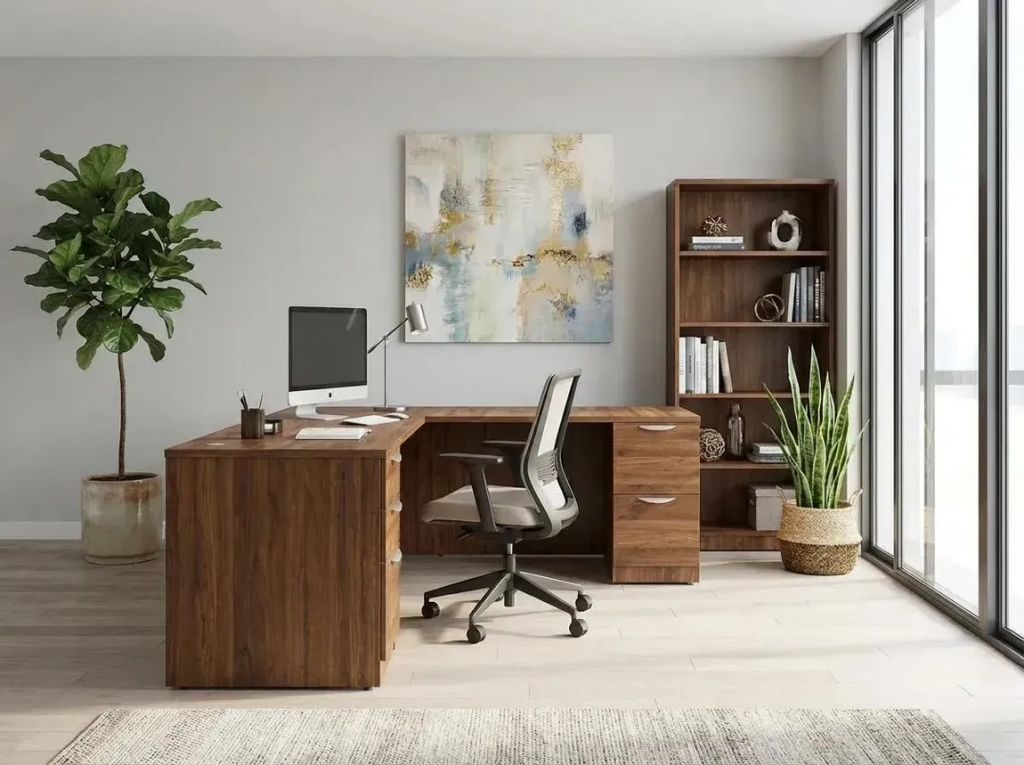
Here is a common mistake worth avoiding. Beige used everywhere with no variation can feel just as flat as gray once did. The trend is not beige for the sake of beige. It is warmth and texture working together. In a commercial setting, that usually means:
● Warm wood tones on desks, tables, and shelving to add depth
● Layered neutrals, like a greige wall paired with caramel upholstery
● Texture through fabric, woven panels, or natural materials instead of flat paint alone
● A single grounded accent color, such as deep green or rust, used sparingly
This is the difference between an office that looks updated and one that just swapped one boring color for another.
Why This Matters for Pennsylvania Businesses
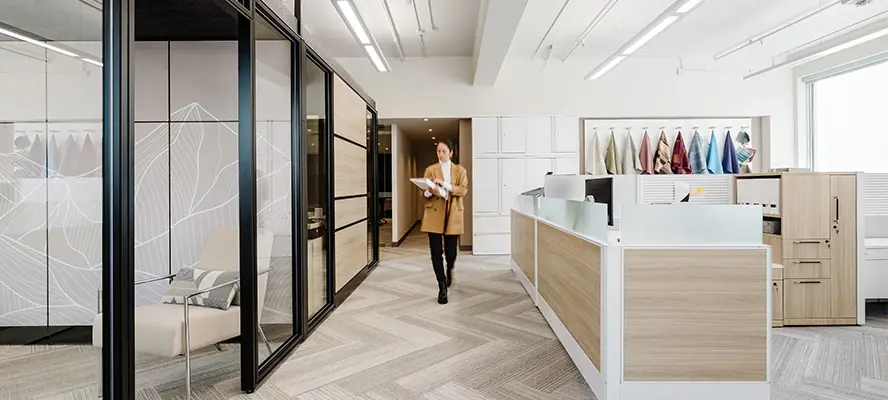
Reading and Lancaster get real seasons. Gray winter skies along Route 222 already make office lighting feel dim enough without gray walls compounding it. Warmer neutrals bounce light differently and make a space feel inviting even on a flat February afternoon.
There is a business case too. Office design affects how candidates perceive a company during interviews, how clients perceive professionalism during a walkthrough, and how employees feel coming in every day. A tired, cold palette sends a message, even if nobody says it out loud.
How to Update Your Office Without a Full Renovation
Most businesses do not need to gut their space to make this shift. A few smart moves go a long way.
Start with furniture. Swapping gray task chairs and panel systems for pieces in warm wood or taupe upholstery changes a room’s feel without touching the walls. If you are working through a broader refresh, our interior design and space planning services can help you figure out where to start.
If a full furniture swap is not in the budget yet, used and refurbished pieces in warmer tones are a smart way to shift gradually. Our full product catalog includes new and refurbished inventory in finishes that move away from cold gray without a complete redesign.
Call us at (610) 926-8700 or reach us on our website and we can walk you through what is realistic for your space and timeline.
Frequently Asked Questions
Are commercial office interior designers in Lancaster PA actually recommending beige over gray right now?
Yes. Designers across the region are shifting clients toward warmer neutrals like beige, greige, and taupe instead of cool gray. The change is driven by national color trends and by a real desire for offices that feel less sterile and more comfortable to work in.
Is gray completely out of style for offices?
No. Gray still works well as a base or accent, especially paired with warm wood and softer neutrals. What is changing is the use of gray as the dominant, default color. Designers are layering it with warmth instead of leaning on it alone.
What colors are replacing gray in office design?
Beige, greige, taupe, putty, and warm wood tones are leading the shift. Many designers are also adding small amounts of deeper, grounded color like olive green or rust as accents.
Will warm neutrals make my office look dated in a few years?
Not if you avoid flat, single-tone beige. Layering texture, wood, and varied neutral shades keeps a space feeling current. Flat, one-note color schemes are what age quickly, regardless of which color you choose.
How much does it cost to update office colors without a full renovation?
It depends on scope, but many businesses start with furniture and accent pieces rather than repainting everything. Swapping chairs, panels, or accent furniture into warmer finishes is often the most cost-effective first step.
Does Furniture Soup help with full office color and design planning, not just furniture sales?
Yes. Space planning and interior design are part of what we do for commercial clients across Pennsylvania, from a single room refresh to a full office buildout.
How do I get started with a commercial office redesign in Reading or Lancaster, PA?
Call (610) 926-8700 or visit our showroom at 1031 D MacArthur Rd, Building 2, in Reading. We will walk through your space and talk through what makes sense for your goals and your budget.
Ready to Move Your Office Beyond Gray?
If your office still looks like it was designed in 2014, you are not alone, and you are not stuck with it. Furniture Soup works with businesses across Pennsylvania to update commercial spaces with warmer, more inviting palettes that still feel professional.
Visit our website or call (610) 926-8700 to talk through your space. Our showroom at 1031 D MacArthur Rd, Building 2, Reading, is open Monday through Friday, 9am to 5pm. Walk in anytime.
About the Author
Brenda Gaul | Owner & Lead Designer, Furniture Soup
Reading, Pennsylvania | Custom Furniture & Home Design Specialists
Brenda Gaul is the owner of Furniture Soup and serves as the company’s president and lead commercial interior designer. She has built the firm’s strong reputation by fostering lasting relationships with clients who continue to return for future projects. Brenda leads with a clear focus on delivering thoughtful, functional spaces tailored to the needs of each business she works with.
Alongside her expert team of project managers, designers, and installers, Brenda has helped companies navigate office expansions, relocations, and even liquidations. Furniture Soup has outfitted offices for well-known corporate and manufacturing clients of all sizes, both locally and across the country. Brenda remains hands-on throughout the process, ensuring every project is completed with attention to detail and a commitment to doing things the right way.
For Brenda, the work goes beyond furnishing a space. It is about helping businesses operate more efficiently and creating environments that support growth, productivity, and long-term success. Every project reflects her dedication, experience, and genuine care for the clients she serves.